
The politics of the high-rise

Early this June I was in Toronto for the first in-person meeting of the Canadian Historical Association since 2019. It was an absolute pleasure to return to a “normal” (as normal as academic conferences get!) experience of meeting my peers from across the country, catching up on work in the field, and presenting my own research.
My presentation at the CHA outlined my new research project on the politics of high-rise living in Canadian cities. From the 1950s through the early 1970s, thousands of high-rise apartment buildings were constructed in cities across Canada, and hundreds of thousands of Canadians made their homes in them. The tower boom was most visible in central city neighbourhoods like Vancouver’s West End and Toronto’s St. James Town, but concrete apartment blocks were part of urban development across the country.
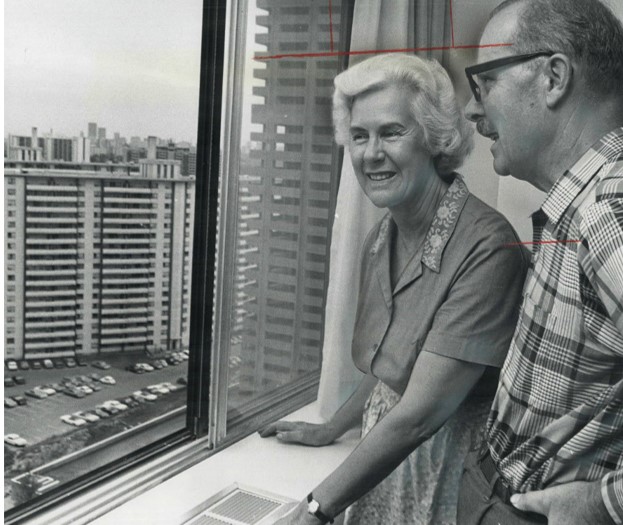
The apartment tower and high-rise living deserve more attention from historians. Like its contemporary the single-family suburban bungalow, the high-rise sits at the intersection of the economic, political, and cultural histories of the postwar decades. Building towers was a profitable business that created new relationships between investment capital, expertise, and the urban landscape. Despite the discourses of modernity and comfort that surrounded their construction, high-rises were politically unpopular. In nearly every city touched by the tower boom, aesthetic, social, and economic critiques of apartments and apartment living had a significant influence on neighbourhood and municipal politics.
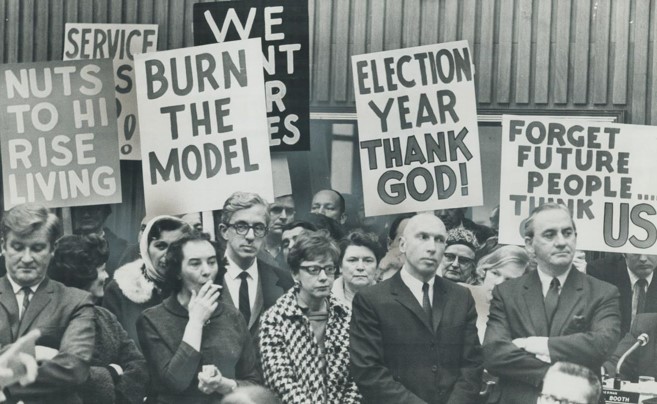
Perhaps most importantly, the apartment tower tangibly reconfigured the lives of the many Canadians who, by choice or by necessity, adopted high-rise living during this period. Throughout this period, questions of safety, sociability, and equity in vertical neighbourhoods were raised not just by concerned observers, but by apartment-dwellers themselves. Using sources including door-to-door surveys, the press, tenant group publications, and municipal documents, my paper at the CHA explored the politicization of the apartment boom in Canadian cities in the 1960s and early 1970s, with a particular focus on how tower builders, residents, and critics mobilized in very different ways to promote, improve, or critique high-rises and vertical living.

 Daniel Ross